

CMS-0057-F is a payer-side rule, but the shockwave lands squarely on the form and workflow layer that outpatient practices touch every day. The Prior Authorization API compliance date is January 1, 2027, and payers are already choosing between a standalone compliance appliance and a set of modules embedded on top of an existing FHIR core. The choice looks like a procurement detail until you walk the calendar forward two years and notice how quickly a standalone platform starts to look like the old billing system nobody wants to open.
For clinic operators watching this from the outside, the punchline is simple: the vendor decisions payers make in 2026 will show up in your intake and referral flows by mid-2027. For more on health-data exchange for clinics, the rest of the site fills in the FHIR mechanics that sit under all of this.
What The Rule Actually Locks In
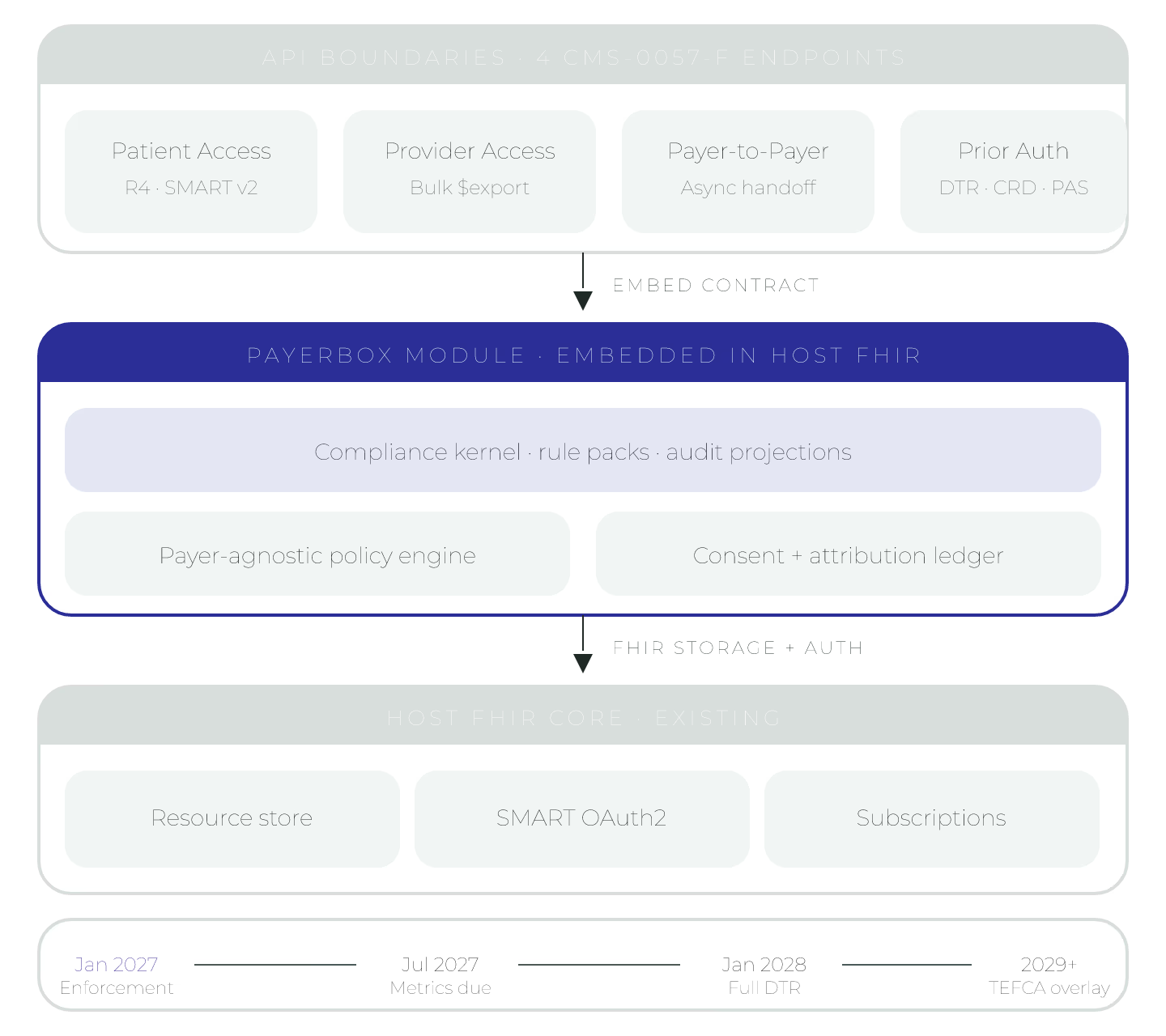
CMS-0057-F is the final rule commonly called the Interoperability and Prior Authorization Final Rule, published by CMS in early 2024. It applies to Medicare Advantage, Medicaid, CHIP, and QHP issuers on the federal exchanges. The compliance clock has several dials, and confusing them is the most common early mistake.
- Patient Access API expansion (claims, encounters, and prior auth data), effective January 1, 2027.
- Provider Access API, same date.
- Payer-to-Payer API, same date.
- Prior Authorization API using HL7 FHIR and Da Vinci implementation guides, same date.
- Impacted metrics reporting, first report due March 2026 and annually after that.
The four APIs are not four separate products. They share the same FHIR core, the same authorization surface, and the same Da Vinci IG family (PDex, PDex Plan-Net, CRD, DTR, PAS). That shared backbone is where the standalone-versus-embedded question gets interesting.
Standalone Means A Side-Car System
A standalone CMS-0057-F platform is a purpose-built appliance that a payer runs next to its existing FHIR estate. It has its own data model, its own auth layer, its own admin UI, and its own maintenance rhythm. It ships on time for January 2027 precisely because it does not try to share anything with the rest of the stack.
That works on day 1. Day 2 is the problem. The rule that ships in 2027 is not the last rule. TEFCA participation obligations, additional Da Vinci IGs, ACA-1156 style benefits and eligibility rules, and the ongoing PDex versioning schedule all land on the same FHIR data. A side-car appliance has to be re-integrated for each of them, or it accumulates data-sync scaffolding until it becomes the legacy system by 2028.
Why Embedded Reads Very Differently On The Same Timeline
An embedded compliance layer takes the opposite bet: use the FHIR server you already have, and treat CMS-0057-F as a set of APIs and configurable modules added on top. The four APIs share resources, the DTR and PAS forms live in the same Questionnaire store as everything else, and the metrics reports come out of the same query surface used for other reporting.
That approach also carries the same regulatory clock forward. When TEFCA obligations expand and the next Da Vinci IG revision drops, the embedded modules update in place instead of triggering a second procurement cycle. In the embedded compliance camp, offerings like Payerbox from Health Samurai treat CMS-0057-F as a set of APIs to layer onto an existing FHIR core rather than a separate platform to procure.
For form and intake teams downstream, that difference matters. DTR Questionnaires reach the clinician through the same delivery channel as any other Questionnaire. The top 6 ways to deliver a FHIR Questionnaire to patients in 2026 piece walks through those delivery options, and the complete guide to FHIR intake forms for outpatient practices in 2026 covers how those forms fit into the workflow.
Who Should Care Before 2027
Clinics do not procure CMS-0057-F platforms. Payers do. But the choice a payer makes in the next six months shapes what the referral portal, the eligibility check, and the DTR form look like on the clinic side for the rest of the decade. The short version is this: a standalone platform ships fast and ages fast, while an embedded compliance layer costs more attention up front and does not turn into legacy the day after go-live.
Sources
- HTML, CMS.gov fact sheet - CMS Interoperability and Prior Authorization Final Rule CMS-0057-F (official rule summary, four FHIR APIs, Jan 1, 2027 compliance)
- PDF, HHS/CMS - Official fact sheet for CMS-0057-F (compliance timeline, impacted payer types, API scope)
- HTML, Federal Register - CMS-0057-F final rule as published Feb 8, 2024 (authoritative regulatory text, Da Vinci IGs, effective dates)
