
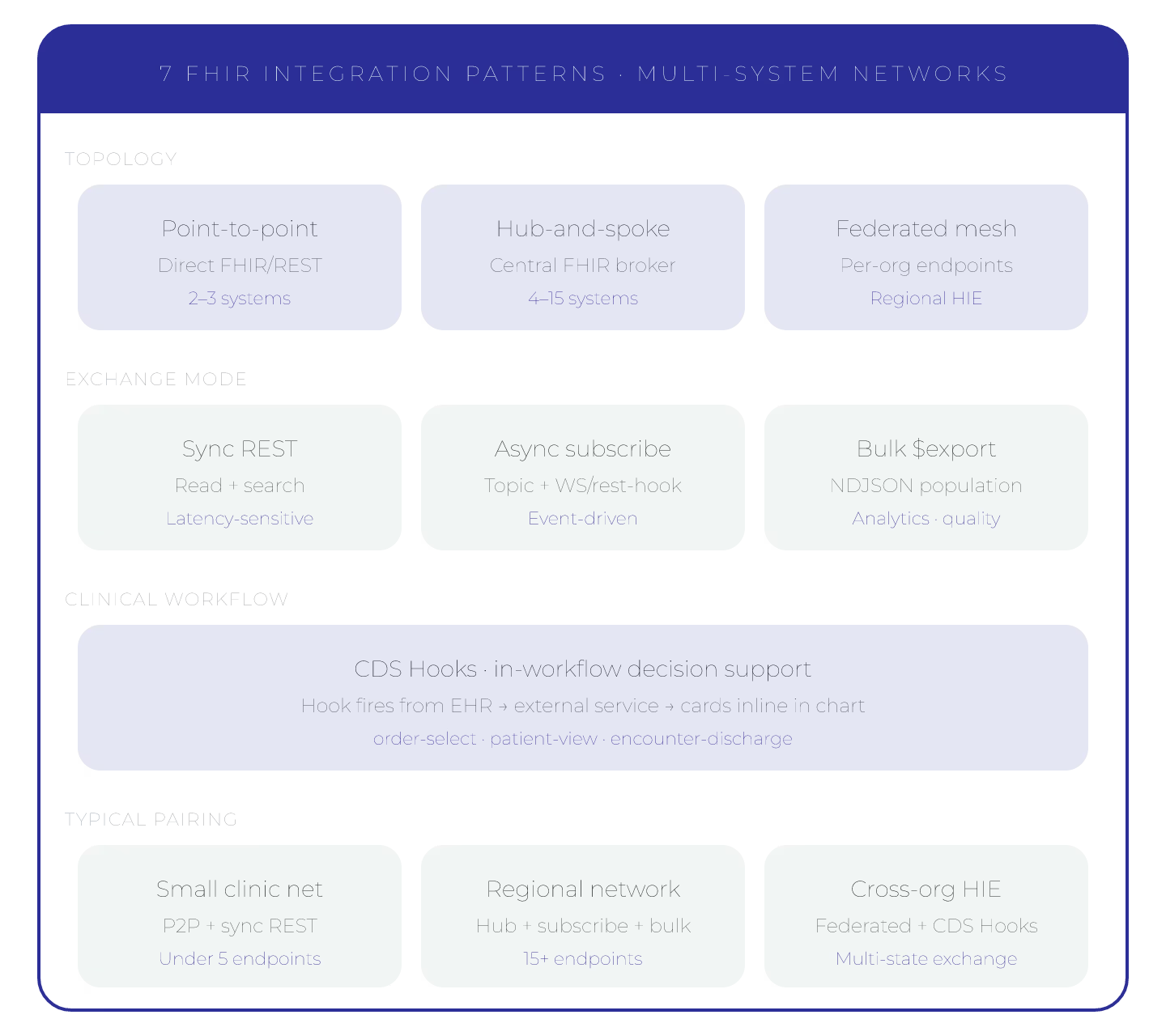
Have you ever felt like your medical records are scattered across different clinics, like puzzle pieces that never quite fit together? It’s frustrating, right? Well, the good news is, things are changing. Today, I want to talk about FHIR solutions and how they’re revolutionizing patient data management, making healthcare integration smoother than ever before. It’s a game-changer, and I’m excited to share what I’ve learned.
What Exactly Are FHIR Solutions?
Okay, so FHIR, or Fast Healthcare Interoperability Resources, is basically a standard for exchanging healthcare information electronically. Think of it as a universal language that allows different healthcare systems to “talk” to each other. FHIR solutions are the tools and platforms that leverage this standard to improve data sharing and integration. It’s kind of like the USB of healthcare data. You know, plug and play!
7 FHIR Solutions Making a Real Difference
Now, let’s dive into some specific examples. These solutions aren’t just theoretical; they’re actually being used to improve patient care and streamline healthcare operations.
- FHIR-based APIs for Data Exchange – These APIs allow developers to build applications that can access and exchange patient data securely and efficiently. It’s like having a direct line to the information you need, when you need it.
- FHIR Servers for Centralized Data Storage – hl7 fhir server act as central repositories for patient data, making it easier to access and manage information from different sources. Think of it as a single, organized filing cabinet instead of a bunch of messy drawers.
- FHIR Connectors for Legacy Systems – These connectors bridge the gap between older healthcare systems and modern FHIR-based platforms, allowing them to share data seamlessly. It’s like a translator for different computer languages.
- FHIR-enabled Mobile Apps – Mobile apps that use FHIR can provide patients with access to their medical records, appointment scheduling, and other healthcare services on their smartphones or tablets. Convenient, right?
- FHIR Analytics Platforms – These platforms use FHIR data to generate insights and analytics that can help healthcare providers improve patient care and optimize operations. It’s like having a data-driven crystal ball.
- FHIR integration engines – These tools help connect different systems and applications using the FHIR standard, facilitating interoperability and data exchange.
- FHIR data transformation tools – These tools convert data from various formats into FHIR format, enabling seamless integration with FHIR-based systems and applications.
Why FHIR Solutions Matter – A Personal Anecdote
I remember when my grandmother had to switch doctors, and the new doctor had no idea about her previous treatments or allergies. It was a mess! FHIR solutions could have prevented that by making it easy for her medical records to be shared securely and efficiently. It’s not just about convenience; it’s about patient safety. “Data accessibility in healthcare is paramount for ensuring informed clinical decision-making and improved patient outcomes,” according to Dr. Anya Sharma, a leading expert in healthcare informatics.
The Future of Healthcare is Integrated
In general, FHIR solutions are paving the way for a more connected and efficient healthcare system. They empower patients, streamline workflows for healthcare providers, and enable data-driven decision-making.
Final Thoughts
So, what do you think about the potential of FHIR solutions to transform healthcare? I, for one, am incredibly optimistic. While there are challenges to overcome, the benefits are clear. Hopefully, this article has inspired you to learn more about FHIR and its potential to improve healthcare for everyone. And who knows, maybe one day, accessing your medical records will be as easy as checking your email!